When the sirens sound across Oklahoma, every second matters. Most families have a plan for getting themselves to safety — but what about the dogs, cats, birds, and other furry companions who depend on you? When it comes to preparing your family for storm season, having pet-friendly storm shelters is not just a nice-to-have. It’s a critical piece of your family’s survival strategy, especially in Tornado Alley. This blog walks pet owners through everything they need to know to keep their entire family safe when a storm hits.
Why Pet-Friendly Storm Shelters Matter
Oklahoma sits squarely in one of the most tornado-prone regions in the world. Residents of Oklahoma City and surrounding communities know all too well how fast conditions can deteriorate. Tornadoes can develop in minutes, and when strong winds and flying debris are bearing down on your neighborhood, there’s no time to improvise a plan for your four-legged family members.
Pets are family. For millions of households, dogs, cats, birds, and other animals aren’t just animals — they’re members of the household who deserve the same level of protection as humans. Yet many storm shelters and public safe rooms have restrictions on animals, leaving pet owners scrambling when severe weather strikes. That’s why choosing a pet-friendly shelter solution at home is one of the most important decisions you can make.
What Makes a Shelter Truly Pet-Friendly
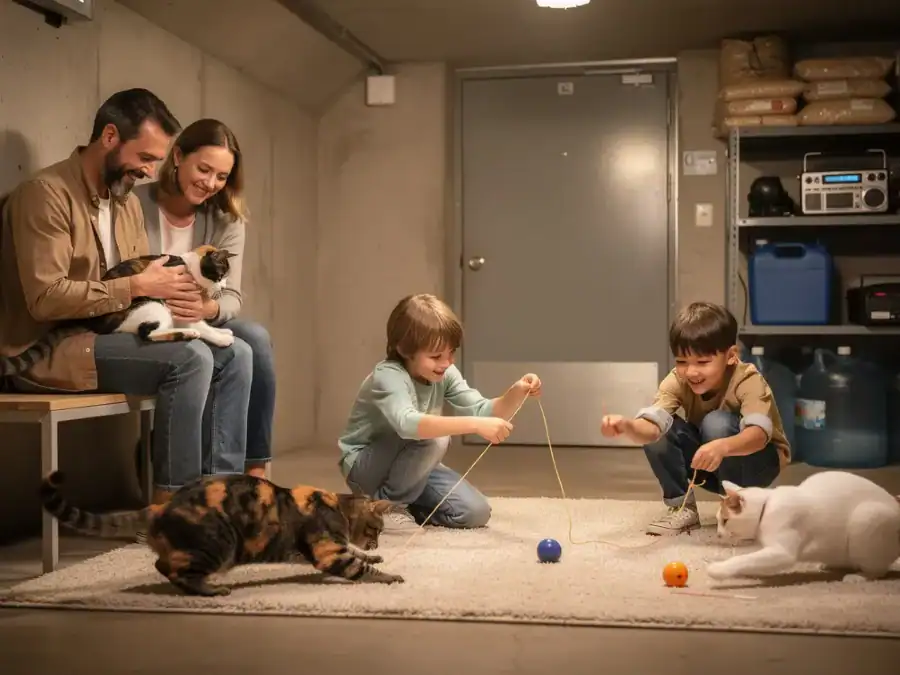
Not every tornado shelter is built with pets in mind. A pet-friendly shelter accounts for the practical realities of evacuating with animals — wide enough doors to move a crate quickly, adequate ventilation to keep the air fresh, and enough room for both you and your furry friends to stay secure through a storm.
Access and Entry Design
When sirens blare, you need to get inside fast — and so do your pets. Wide doors and low entry thresholds make a significant difference, especially for larger dogs or owners managing multiple animals at once. Above-ground safe rooms installed inside your home are often the most accessible option for pet owners, eliminating the need to navigate ladders with a frightened cat in a carrier or a leashed dog pulling in the wrong direction.
Garage shelters are another excellent choice for families with pets. Because they’re installed beneath the garage floor and accessed from inside, you can move animals safely without stepping outside into the storm. The key is choosing a design where access feels natural and fast — not a scramble.
Space for Pets, Crates, and Supplies
Size matters when planning a pet-friendly shelter. A shelter that fits two adults comfortably may feel dangerously crowded once you add a dog crate, a cat carrier, and the essential items your pets need. As a general rule, plan for at least an extra two square feet per small pet and significantly more for larger dogs.
Consider what needs to come with you: crates or carriers for each animal, a leash and collar, food and water, medications, and comfort items like a favorite toy or blanket. All of these take up room. Families with multiple pets — or a mix of dogs, cats, and birds — should size up and ensure the shelter can realistically accommodate everyone without creating additional stress.
Ventilation, Comfort, and Noise
Underground shelters are incredibly effective at protecting against tornadoes and flying debris, but they can feel claustrophobic and hot — especially for anxious animals. Good ventilation keeps the air fresh, regulates temperature, and makes the experience less stressful for pets who are already responding to the sounds of the storm outside.
Reducing anxiety is a real concern. Pets feel stress acutely, and a confined space during a loud, frightening event can trigger panic. Features like adequate lighting, a familiar scent from a blanket or favorite toy, and enough room to sit or lie down help provide comfort during what is — for both you and your animals — a frightening experience.
Best Shelter Types for Pet Owners
Above-Ground Safe Rooms
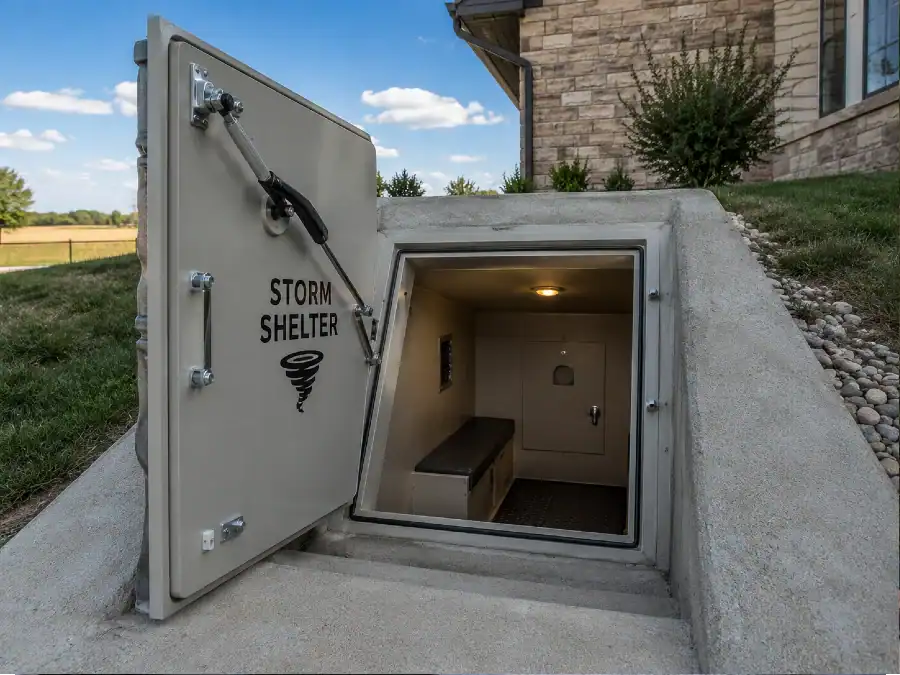
Above-ground safe rooms installed inside the home are often the top choice for families with pets. They eliminate the access barriers of underground shelters, keep all family members together, and can be customized to accommodate crates and carriers. Because they’re interior to the home, pets encounter a familiar environment even in a frightening moment, which can help them stay calm.
Garage Shelters
Garage shelters offer a compelling combination of protection and accessibility. Installed beneath the garage slab, they provide FEMA-compliant storm safety while allowing families to move pets from inside the home without stepping into the elements. For households with dogs or cats that might bolt at the sound of thunder, keeping the entire evacuation process indoors is a significant advantage.
In-Ground Outdoor Shelters
Traditional in-ground shelters provide excellent protection against strong winds and flying debris and are a trusted choice across Oklahoma. Pet owners should plan carefully for this option — practice the descent with animals beforehand, ensure the ladder is manageable with a leashed dog, and confirm there’s sufficient floor space for crates at the bottom. They work well for many families; they simply require more deliberate preparation.
How to Prepare Your Pets Before a Storm Hits
No matter which shelter type you choose, preparation is everything. Animals who are unfamiliar with the shelter space are more likely to resist entering it, creating dangerous delays when every second counts.
Crate and Carrier Training
A crate isn’t just storage — it’s a safe space that helps pets feel secure in high-stress situations. Begin crate training well before storm season so that the crate becomes a place of comfort rather than a source of additional anxiety. During drills, place a familiar blanket, comfort items, or treats inside to create positive associations. For cats, practice with carriers regularly so the experience isn’t associated exclusively with stress.
Build Your Pet Emergency Kit
Your emergency kit for pets should be just as thorough as the one you maintain for your human family members. A complete pet emergency kit should include:
- At least three days of pet food and fresh water
- Any medications your pet requires, along with copies of current prescriptions
- A pet first aid kit with bandages, antiseptic wipes, and basic supplies
- Vaccination records and veterinary contact information
- Leashes, collars with ID tags, and a backup harness
- A favorite toy and comfort items to reduce anxiety
- Waste bags, litter for cats, or other sanitation supplies
- Treats for rewarding calm behavior during drills and actual emergencies
Review and rotate pet food and medications regularly to ensure nothing in the kit is expired. Keep the kit stored near the shelter entrance so it can be grabbed quickly without searching the house.
Practice Shelter Drills
Pets learn through repetition. Running regular shelter drills — ideally several times before tornado season peaks — helps your animals associate the process with calm, reward-based outcomes rather than fear. Walk your pets through the evacuation sequence, guide them into their crates, and reward them with treats and praise. Over time, the routine becomes familiar, and when real sirens sound, your pets are far more likely to respond quickly and stay secure.
At OKC Shelters, families are encouraged to practice storm shelter routines ahead of severe weather season so both people and pets can feel safe, prepared, and confident during emergencies.
Pet Safety During Severe Weather: Before, During, and After

Before the storm: Keep pets indoors when severe weather watches are issued. Ensure collars have current ID tags and that microchip registrations are up to date — this is crucial if animals become separated during or after a natural disaster. Move pet food, medications, and supplies to the shelter area before conditions deteriorate.
During the storm: Once in the shelter, keep pets in their crates or secured on leashes. Even calm, well-trained animals can react unpredictably to the sound of a tornado passing overhead. Speak calmly, offer treats, and avoid reinforcing anxious behavior.
After the storm: Do not open shelter doors until you are certain the storm has passed. Floodwaters, downed power lines, and structural damage present dangers that affect both humans and animals. Keep pets leashed when exiting — the altered landscape and unfamiliar debris may cause them to run or panic.
Sizing and Installation Considerations
When working with a shelter company, be upfront about the number and size of your pets. A family of four with two large dogs and a cat has very different space requirements than the same family without animals. Reputable installers will help you choose a model that accounts for your entire household — on four legs or two.
Financing options and rebate programs are available through many shelter providers in Oklahoma, making it more accessible for families to invest in a properly sized, pet-accommodating solution rather than making do with an undersized unit.
Frequently Asked Questions
Are pets allowed in community storm shelters?
Many public and community shelters do not allow pets, which is one of the strongest reasons for pet owners to invest in a private, home-based solution.
What size shelter do I need for my pets?
Plan for your human occupants first, then add space based on the number, size, and crates of your animals. Larger dogs require more floor space; multiple pets mean multiple carriers.
Should pets stay in crates during a tornado?
Yes. Crated pets are safer, less likely to injure themselves or others in a panicked state, and easier to manage in a confined space.
What should go in a pet first aid kit?
A dedicated pet first aid kit should include sterile gauze, adhesive bandages, antiseptic solution, tweezers, a digital thermometer, saline eye wash, and any prescription medications. Store it alongside your human first aid kit in the shelter.
Protect Your Whole Family — Four Legs Included
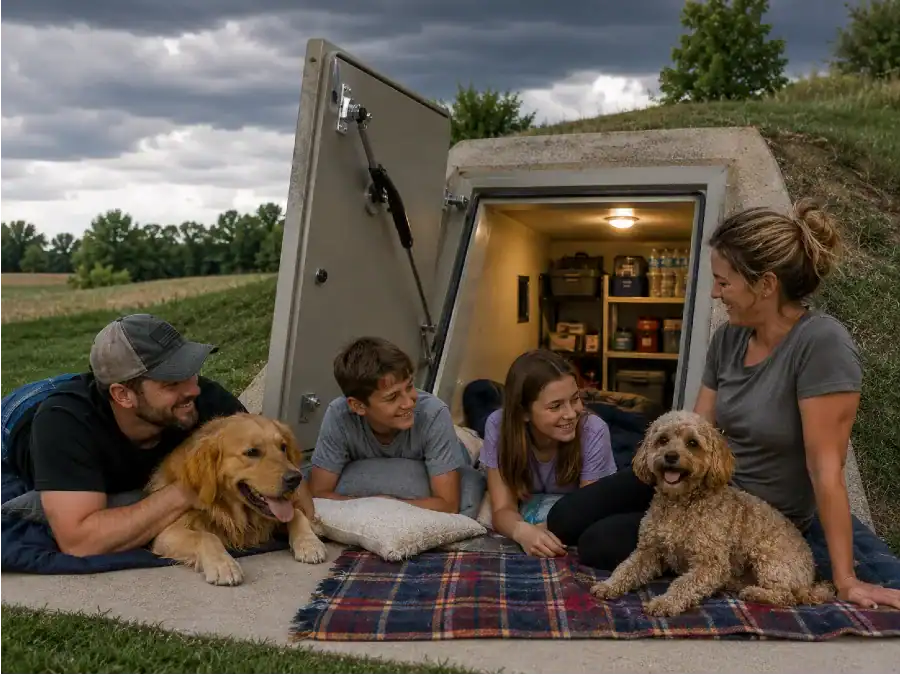
In Oklahoma, being prepared for tornadoes isn’t optional — it’s the responsibility that comes with living in Tornado Alley. Pet-friendly storm shelters make it possible to protect every member of your household when a storm hits, without the chaos of last-minute decisions. With the right shelter, a solid evacuation plan, and a well-stocked pet emergency kit, you can face severe weather with confidence — knowing both you and your furry companions are ready.
Contact OKC Shelters today to explore shelter options designed for real Oklahoma families — including the ones who bark, meow, and chirp.