When severe weather strikes Oklahoma, every second matters. A well-built storm shelter gives your family a safe place to go, but the shelter location is just as important as the shelter itself. If it is hard to reach, too far from the house, placed near poor drainage, or blocked by vehicles and storage, it may not give you the peace of mind you expected.
That is why choosing the best location for installing a storm shelter starts with more than picking an empty spot in the yard. The right location should fit your home, your routine, your soil conditions, your access needs, and the type of shelter you want installed. For many Oklahoma families, the best storm shelter location is near a back door, garage area, garage doors, or shop buildings, where the shelter can be reached quickly without creating problems with drainage, utilities, or future property use.
At OKC Shelters, we help homeowners compare shelter types, review the property layout, and choose the right location before installation begins.
Why Storm Shelter Location Matters in Oklahoma
Oklahoma weather can change fast. A calm afternoon can turn into a warning situation before everyone has time to think through a plan. That is why storm shelter placement should feel natural and easy. The best location should always consider accessibility, safety, and practical installation, especially for homes with children, elderly family members, pets, or anyone who needs extra time to move.
A shelter that is too far from the home may not be ideal during heavy rain, hail, lightning, or flying debris. A shelter placed in low-lying areas can create water problems. A shelter installed without utility clearance and septic review can delay the project or create costly issues. The best location for your storm shelter should be close enough to reach quickly, but far enough from obstacles, drainage problems, and restricted areas.
This is where a local installer matters. For a location in Oklahoma, experts should understand how Oklahoma lots are shaped, how soil conditions can vary, and why proper drainage is so important for underground options. A good Oklahoma expert placement guide should start with safety, then look at access, drainage, utilities, equipment space, and local building codes before recommending the final location.
Best Storm Shelter Location Options
There is no single perfect answer for every home. Perfect storm shelter locations depend on how your property is built and how your family uses the space every day. Some Oklahoma families prefer installations near the garage because of easy access. Others choose outdoor shelters because they have more space in the yard. Some need a safe room or above-ground option because stairs or underground access are not practical.
Garage Storm Shelter Placement

A garage can be one of the best locations for storm shelter installation because it keeps the shelter close and protected from the weather. A garage storm shelter is usually installed below the garage floor, giving your family quick indoor access when severe weather is nearby. It also helps preserve yard space and keeps the entrance familiar.
This option works well when the garage has enough room, proper slab conditions, and clear access for installation equipment. It is also helpful for families who do not want to run outside when sirens sound. If your garage is crowded, the main concern is keeping the shelter door clear. Tools, boxes, bikes, or vehicles should never block access.
Garage storm shelter installations may also require careful consideration around the garage layout. Crews need room to cut the concrete, excavate, place the ground storm shelter, and restore the area. If your garage has narrow doors or limited working space, the installer will check access and equipment requirements before confirming the location.
Outdoor Storm Shelter Placement
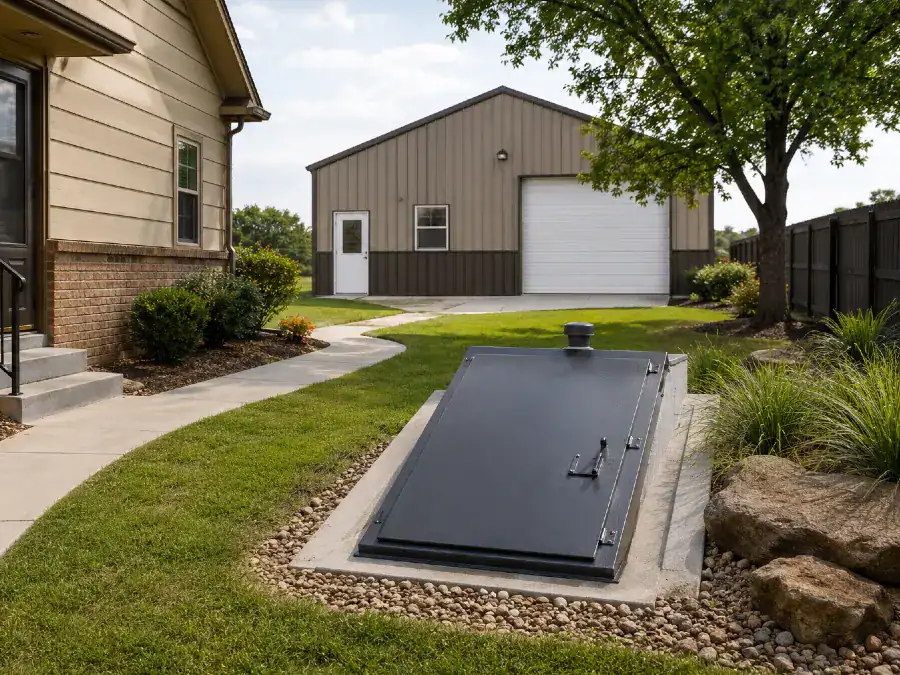
Outdoor shelters can be a strong choice when the garage or interior space does not work. A backyard, side yard, or area near back doors can provide convenient access while allowing more space for the shelter itself. This can be especially useful for larger families or properties with shop buildings.
Outdoor ground shelters involve drainage utilities because water naturally moves toward low areas. In fact, ground shelters require excellent drainage because water naturally moves toward low areas. A location with poor drainage can lead to water pooling around the entrance or around the shelter after heavy rain. A slightly raised area may be better than a low spot. In some cases, a shelter on a slope provides excellent natural drainage, but the slope still needs to be evaluated for safe access and proper installation.
The right outdoor shelter location should also account for existing landscaping. Note that installation depends on how much space is available for excavation, crane access, backhoe movement, and offloading. Trees, fences, patios, retaining walls, and sprinkler systems can affect the final plan.
Safe Rooms and Above-Ground Shelters
Safe rooms and above-ground shelters are often chosen when easy walk-in access matters most. They can work well for elderly family members, people with mobility concerns, or anyone who prefers not to use stairs. FEMA guidance and ICC standards focus on tested design, anchoring, wind resistance, and protection from windborne debris, not simply whether the shelter is above or below ground. FEMA also provides residential safe room guidance through FEMA P-320, while ICC 500 is widely used for storm shelter design and construction standards.
Above-ground shelters may be installed in garages, patios, shops, or interior spaces when the concrete and layout are suitable. These shelter types require crane access or enough working room to move and anchor the unit correctly. They also need to meet ground location requirements, including slab strength, anchoring needs, doorway clearance, and access around the shelter.
Above-Ground vs. Below-Ground Location
Many homeowners compare above-ground vs. below-ground storm shelter placement before choosing which option to install. Both can be effective when they are built, anchored, and installed correctly. The better choice depends on your property and your family.
An underground storm shelter may feel more traditional and can be placed in a garage, yard, or near the home. It is a strong option when you have good drainage, enough excavation space, and safe entry access. However, below-ground shelters need careful planning because installation involves drainage, utility access, soil conditions, and safe digging.
Above-ground shelters are often easier to enter, especially for people who do not want to climb down steps. They also work well where digging is difficult or where poor drainage makes underground placement less practical. The tradeoff is that they need enough slab space and strong anchoring.
The best placement balances safety, accessibility, and practical installation. That means the right answer is not always “garage,” “yard,” or “safe room.” The right location is the one that lets your family reach protection quickly and keeps the installation safe, clean, and code-aware.
Essential Location Factors Before Installation
A professional site assessment should happen before you install a storm shelter. This step helps avoid surprises and makes sure the chosen spot can support the shelter safely.
First, the installer checks how much space is available. The space needed for your shelter depends on the shelter size, entry style, excavation area, and equipment path. A small shelter may fit in tighter areas, but the crew still needs room to work. Some access notes may include gate width, overhead clearance, or staging space, such as 10′ W x 14′ H or 10′ W x 25′ H, depending on the equipment used.
Second, the site must be checked for utilities. Public utility locates help identify marked service lines, but homeowners must locate private lines too. Homeowners must locate private lines, including sprinkler systems, gas lines to grills or shops, private electrical lines, septic lines, and any unmarked utilities. This matters because no one wants to hit utilities during installation. Storm shelter installation involves drainage, utilities, and access planning, so private line information is a key part of the process.
Third, the installer considers septic systems and setbacks. Clearance and septic systems can affect where a shelter may go. Utility clearance and septic limitations are especially important on rural properties or homes with detached shops. Property setback requirements and local building codes can also influence the right location.
Finally, the site needs good drainage. Underground shelters require excellent drainage, and outdoor shelters should not be placed where water collects. Low-lying areas may seem convenient, but they can create problems later. Proper drainage keeps the shelter easier to maintain and more dependable after heavy Oklahoma rain.
Local Building Codes, Permits, and City Requirements
Before storm shelter installation, it is smart to ask about local building codes and whether you need a permit for storm shelter work. Requirements vary by city. Some areas may require a building permit for storm shelter installation, while others may have different inspection or placement rules.
A building permit for storm shelter work may depend on the city, shelter type, location, and whether the installation affects concrete, utilities, drainage, or structural areas. If you are not sure, your installer can help guide the conversation and point you toward the proper local office.
FEMA guidelines are also helpful when comparing shelter quality and safety. FEMA safe room publications provide guidance for residential and community safe rooms, while ICC standards are commonly referenced for storm shelter design and construction. The goal is not just to place a shelter somewhere convenient. The goal is to install a storm shelter that gives your family dependable protection when it matters.
Location Mistakes to Avoid
One common mistake is choosing a location only because it is empty. An open patch of yard may look simple, but it may not be the safest or most practical location. If it sits in poor drainage, crosses private utilities, or requires too much travel during a storm, it may not be the best storm shelter location.
Another mistake is placing the shelter too far away from the house. During severe weather, you do not want to run across the yard through hail, wind, rain, or flying debris. For many homes, placement near back doors or garage access works better because the route is shorter and easier to remember.
A third mistake is ignoring installation access. It is important to remember that the site must allow safe equipment movement. If fences, trees, narrow gates, or landscaping block access, the installer may recommend another spot.
Finally, do not assume that public utility marking covers everything. Public locates for public utilities are important, but they may not always include private lines. You must locate private lines, including septic, irrigation, and private electrical runs, before the crew digs.
Get Help Choosing the Right Location
The best location for storm shelter installation is the one that protects your family and fits your everyday life. It should be close, easy to reach, properly drained, clear of utilities, and suitable for the shelter type you choose.
OKC Shelters makes the process simple. We look at your layout, talk through your concerns, and help you choose the right location before installation begins. Whether you want an underground storm shelter, a garage shelter, an outdoor unit, or an above-ground safe room, our team will help you prepare before severe weather strikes Oklahoma.
Ready to install a storm shelter for your home? Get a free quote from us at (405) 896-8080.
FAQs About Storm Shelter Location
What is the best storm shelter location in Oklahoma homes?
Best placement usually starts with the near back doors, garage, shop buildings, or in outdoor areas with enough space and drainage. If you want to install a below-ground unit, the site must support excavation and drainage. If the shelter must be installed behind a fence, near landscaping, or close to a shop, access must be reviewed first.
Can I install a storm shelter on a slope?
Sometimes, yes. A slight slope may provide excellent natural drainage, but it still needs a professional site assessment. The installer must check access, soil conditions, excavation safety, and the entry path.
Do I need a permit for storm shelter installation?
Permit requirements vary by city. Some locations may require a permit for storm shelter work, especially if the project affects concrete, drainage, or structural areas. Always check local requirements before installation.
Where around my house can I install a storm shelter?
The best location around your house depends on access, drainage, utilities, and available space. Many homeowners choose areas near the garage, back door, patio, or shop building because these spots provide quick access and maximum protection during severe weather. A professional site assessment can also determine whether the shelter can fit around your existing landscaping without creating drainage or access issues.
How much space do I need for installation equipment?
The space you need for installation equipment depends on the shelter type, property layout, and access path. Crews may need room for excavation, offloading, and safe equipment movement, especially for underground or outdoor shelters. Before installation, the site should be checked to make sure equipment can reach the area without damaging landscaping, fences, driveways, or nearby structures.