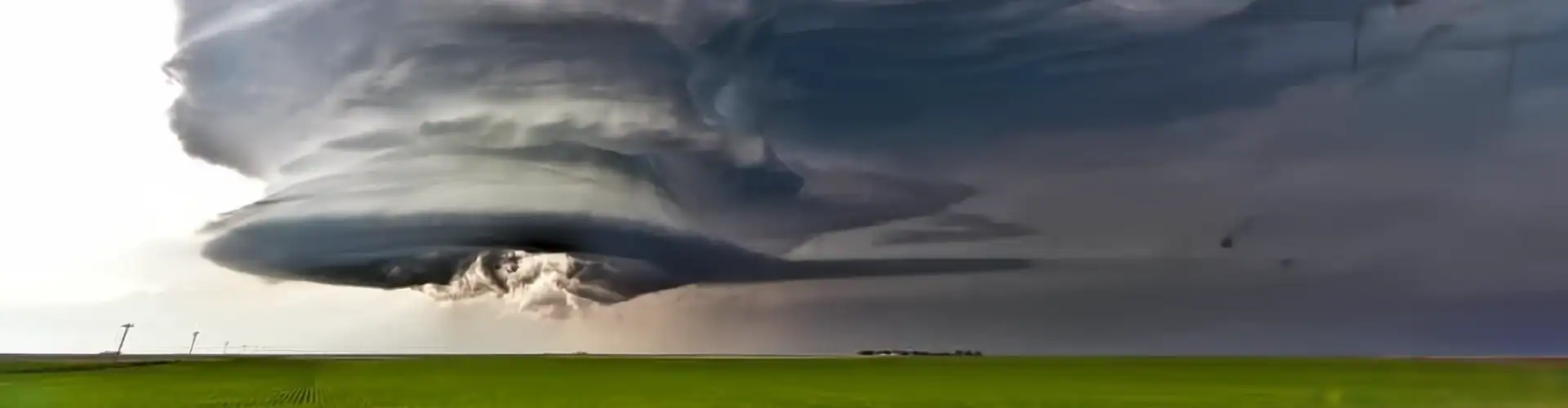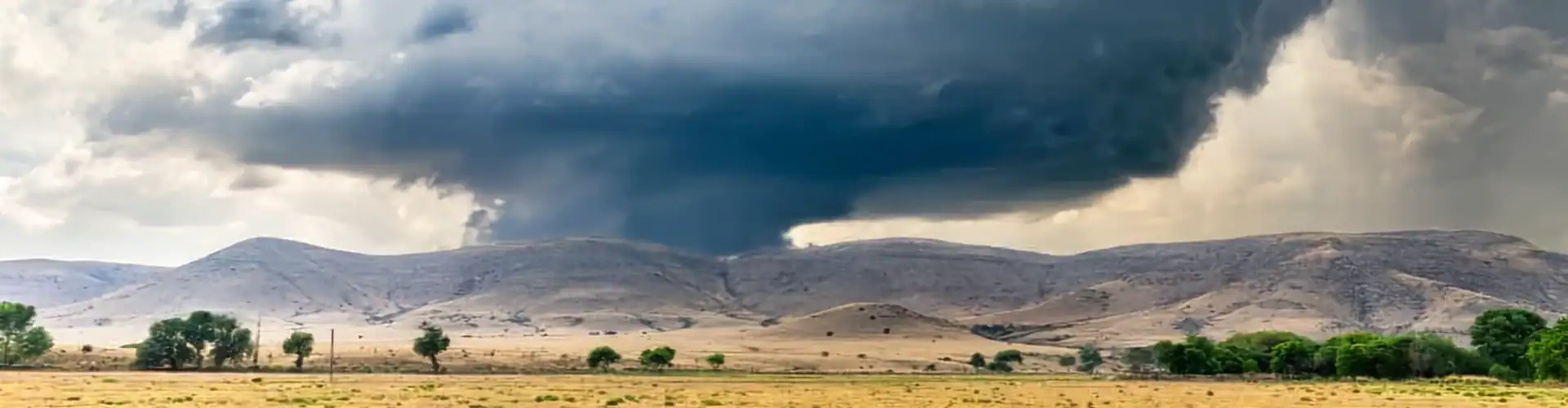
Living in Oklahoma means learning to take storm season seriously. The weather can feel calm one minute, then shift fast with dark skies, strong winds, and tornado warnings. When that happens, everyone in the house needs to know where to go. That is why having a storm shelter matters.
But here is something many people do not think about until they are already inside: storm shelter seating comfort.
A storm shelter is built for safety, security, and fast access when severe weather moves in. It protects your family from tornado winds, flying debris, extreme weather, and the kind of damage that can leave homes and property destroyed. Still, when your family members are sitting inside during severe weather, the space should feel secure, functional, and as comfortable as possible.
Whether you have an underground storm shelter, an outdoor underground shelter, or one of today’s above-ground safe rooms, the right setup for seating, lighting, ventilation, and emergency supplies can help your shelter feel more prepared and easier to use. You do not need anything fancy. You just need a smart setup focused on creating an inviting space that helps your household stay calm and cozy when the storm is close.
Why Storm Shelter Seating Matters
When a tornado warning is issued, every second counts. Your first priority is getting your family members into the shelter safely. But once everyone is inside, the wait can feel longer than expected, especially when another round of weather is still moving through.
Children may feel nervous. Older adults may need steady support. Pets may need a clear spot on the floor. Someone may need access to blankets, water, medication, battery-powered led lights, or other essential supplies. If the shelter feels crowded, dark, or hard to move around in, the wait can feel much longer.
That is why storm shelter seating comfort matters. Good seating gives everyone a place to sit, keeps the room more organized, and helps your household stay calmer while the storm passes.
Start With the Space You Have
Every storm shelter is different. An underground storm shelter installed in a garage floor will not feel the same as an outdoor underground shelter in the yard. Above-ground safe rooms have their own layout too, especially when installed inside a garage, home, or business.
Before adding chairs, cushions, or storage solutions, look at the space honestly. Can everyone get in quickly? Can the reinforced doors close without anything in the way? Is there enough room for sitting without blocking stairs, ventilation, or emergency supplies?
Access is crucial during severe weather. If someone has to step over bags, chairs, or loose blankets to get inside, the setup needs to be adjusted. Your storm shelter should be easy to enter, simple to move around in, and clear enough for every family member to use safely.
Choose Seating That Fits Your Family
Comfortable seating does not have to be complicated. It just needs to fit your shelter and the people who use it.
Bench Seating
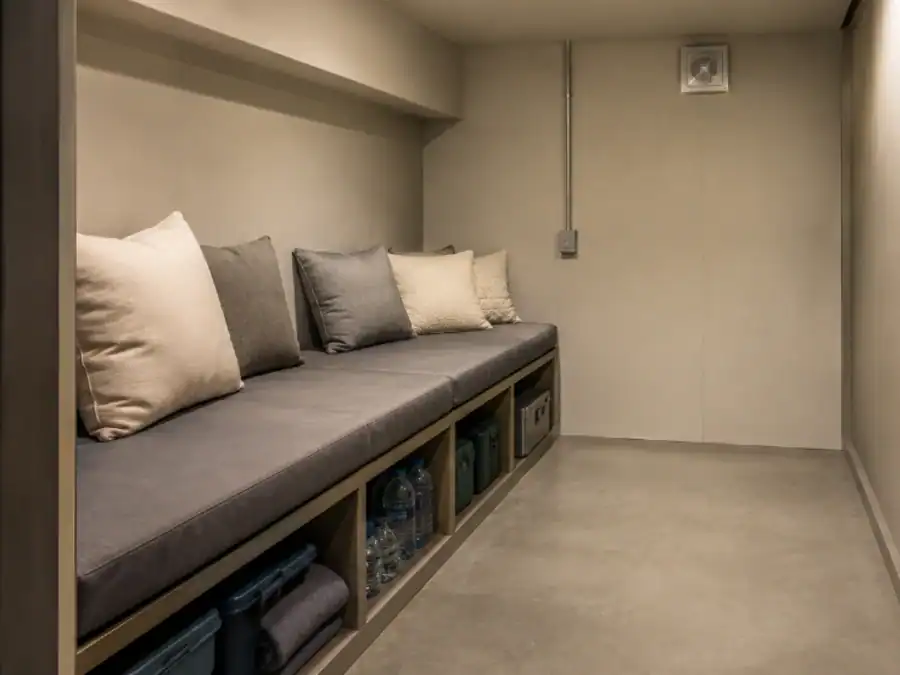
Bench seating can work well in many tornado storm shelters because it saves floor space. A bench along one wall can keep the middle of the room open while giving everyone a clear place to sit. Some benches can also provide storage underneath, which is helpful for keeping supplies organized.
This can be especially useful in an underground storm shelter where space is limited. You can store non-perishable snacks, water, blankets, flashlights, and other emergency items in sealed containers nearby.
Portable Chairs
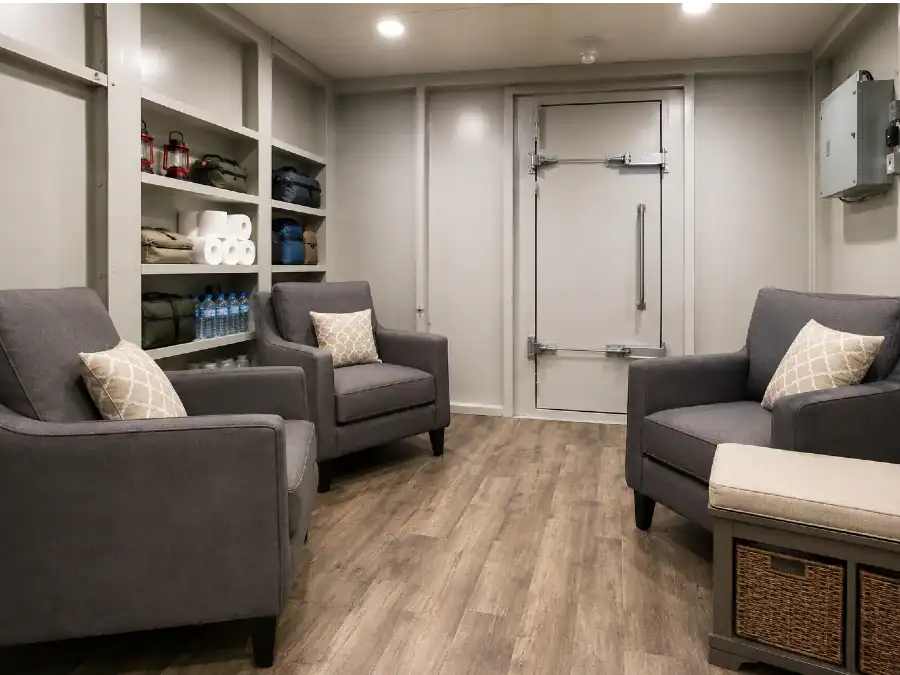
Portable chairs are another good option. Folding chairs or collapsible chairs are easy to move, store, and replace. They may also offer better back support than a narrow bench, especially for older adults.
If your family wants flexibility, portable seating may be the better choice. You can pull chairs out when needed and move them aside when you want more room.

Seating for Safe Rooms
Above-ground safe rooms often allow for easier seating because they usually have walk-in access and more headroom. A sturdy chair, a small storage bench, or a compact supply cabinet can make the room feel more functional without taking away from its safety features.
Safe rooms can also be a strong option for families who want reliable protection without using stairs during a storm.
Accessibility Considerations: Children, Older Adults, and Pets
Every family uses a shelter differently. Some households only need space for two people. Others need room for kids, grandparents, pets, and emergency supplies.
For children, the feeling inside the shelter matters. A dark, crowded room can feel scary fast. Good lighting, a blanket, a small toy, or a book can help them settle down. Seating children close to adults can also help them feel more secure.
For older adults, seat height and support matter. A low bench may be hard to use for someone with knee, hip, or back concerns. A sturdy chair with back support and enough room to stand safely can make a big difference. These accessibility considerations are important before storm season starts, not when sirens are already sounding.
Pets need a plan too. A leash, carrier, small blanket, or collapsible bowl can help keep them calm and controlled. Just make sure pet supplies do not block the floor, stairs, doors, or ventilation.
Keep Safety First
Comfort is helpful, but safety always comes first. A shelter is designed to withstand winds, flying debris, and harsh storm conditions. Anything you add inside should support that purpose.
Keep doors and stairs clear. Reinforced doors are one of the most critical safety features of storm shelters and safe rooms. Do not place chairs, cushions, boxes, or bags where they could block the door from opening or closing.
Do not block ventilation. A shelter can feel crowded quickly, especially during extended stays. Good airflow helps the room feel less closed in and more comfortable.
Watch for water intrusion. Outdoor underground shelters need proper drainage systems and regular checks to help keep the space dry and ready. Moisture can damage seating, supplies, and materials, so keep items off the floor when possible and store supplies in sealed containers. Simple moisture-control measures can help prevent water intrusion and protect the space for long-term use.
Avoid unsafe changes. Drilling into reinforced concrete, changing doors, or adding permanent seating without guidance can affect the shelter’s design. If you are unsure, ask the installer before making changes.
Make Longer Stays Easier
Most tornado warnings do not last for hours, but extended stays can happen. Severe weather can arrive in rounds, power can go out, and debris may make it unsafe to go outdoors right away. A few simple upgrades can enhance the space and make longer waits easier.
Battery-powered led lights are one of the easiest improvements. They help everyone see where to sit, where supplies are stored, and how to move safely. Blankets, small cushions, and washable seat pads can make sitting more comfortable without taking up too much room.
Keep emergency supplies close but organized. Water, non-perishable snacks, a first-aid kit, flashlights, a weather radio, phone chargers, and medications should be easy to reach. These essential supplies do not need to take over the room. A small sealed container can keep everything in one place.
Seating Ideas for Different Shelters
For a garage underground storm shelter, compact seating is usually best. A narrow bench, folding chair, or thin cushion can help save space. Keep the center open so people can get in and out quickly.
For an outdoor underground shelter, moisture control matters. Choose materials that are easy to clean and less likely to hold dampness. Check drainage systems and avoid storing fabric items directly on the floor.
For many above-ground safe rooms, you may have more room to work with. A sturdy chair with back support, organized storage solutions, and good lighting can make the space more inviting while still keeping it secure.
What to Avoid
Avoid bulky furniture. A storm shelter is not the place for recliners, oversized chairs, or anything that makes movement difficult.
Avoid clutter. Loose supplies, scattered blankets, and unstable chairs can become trip hazards.
Avoid moisture-holding materials in an underground shelter. Fabric that stays damp can smell, stain, or develop mildew.
Most of all, avoid waiting until the next storm to get organized. A little planning now can bring real peace of mind later.
FAQs About Storm Shelter Seating Comfort
What is the best seating for a storm shelter?
The best seating is the kind your family can use safely and quickly when warnings sound. Built-in benches, folding chairs, and removable cushions can all work as long as they do not block doors, stairs, ventilation, or supplies.
Can I use cushions inside a storm shelter?
Yes, as long as they stay dry and do not get in the way. Cushions can make seating more comfortable during extended stays. Choose washable, moisture-resistant cushions and store them where they stay dry.
How can I make an underground shelter feel less cramped?
Keep the center open, use compact seating, add battery-powered led lights, and store supplies in sealed containers. Good organization helps the room feel larger and safer.
A Comfortable Haven Starts With a Better Plan
A storm shelter gives your family protection when Oklahoma weather turns dangerous. It helps protect lives from tornado winds, flying debris, and extreme weather. But the inside of the shelter matters too.
With smart storm shelter seating, good lighting, proper ventilation, organized supplies, and simple storage solutions, your shelter can feel secure, functional, and ready for long-term use.
At OKC Shelters, we help Oklahoma families choose storm shelters that fit their home, family, and safety needs. Whether you need an underground storm shelter or an above-ground safe room, our team can help you find reliable protection with practical, comfortable seating.
Contact OKC Shelters today at (405) 896-8080 to learn more about storm shelter options built for Oklahoma weather, family safety, and everyday comfort.