Living in Oklahoma means you learn, pretty quickly, to respect the weather. Every spring warm, humid air rolls up from the Gulf of Mexico and crashes into colder air moving south and our skies turn volatile fast. Those collisions create the conditions that make tornadoes possible—and unfortunately Oklahoma sits right where it happens most often.
Late April through early June is the peak of tornado season with May being the highest risk statewide. But in Oklahoma tornadoes aren’t scheduled in a neat window on the calendar. Twisters have touched down here in every month of the year, and tornadoes have even occurred in January, highlighting the need for year-round awareness and preparedness. The trend is clear: tornadoes can happen anytime here; staying informed and preparing are a necessity rather than an option.
When Is Tornado Season?
Oklahoma’s primary tornado season is late April through early June, with May being the most active month. During this time the atmosphere lines up almost perfectly for severe storms: strong wind shear, plenty of moisture and the jet stream right over the Plains.
But tornado risk doesn’t disappear outside of spring. A second severe weather season often develops in the fall—especially in October and November—when temperature contrasts sharpen again. Even summer and winter aren’t immune.
For up-to-date forecasts and long-term tornado data the National Weather Service’s Storm Prediction Center and NOAA’s severe weather databases are trusted resources. Meteorologists rely on them daily—and prepared families should too.
Why Spring Sees Peak Severe Weather
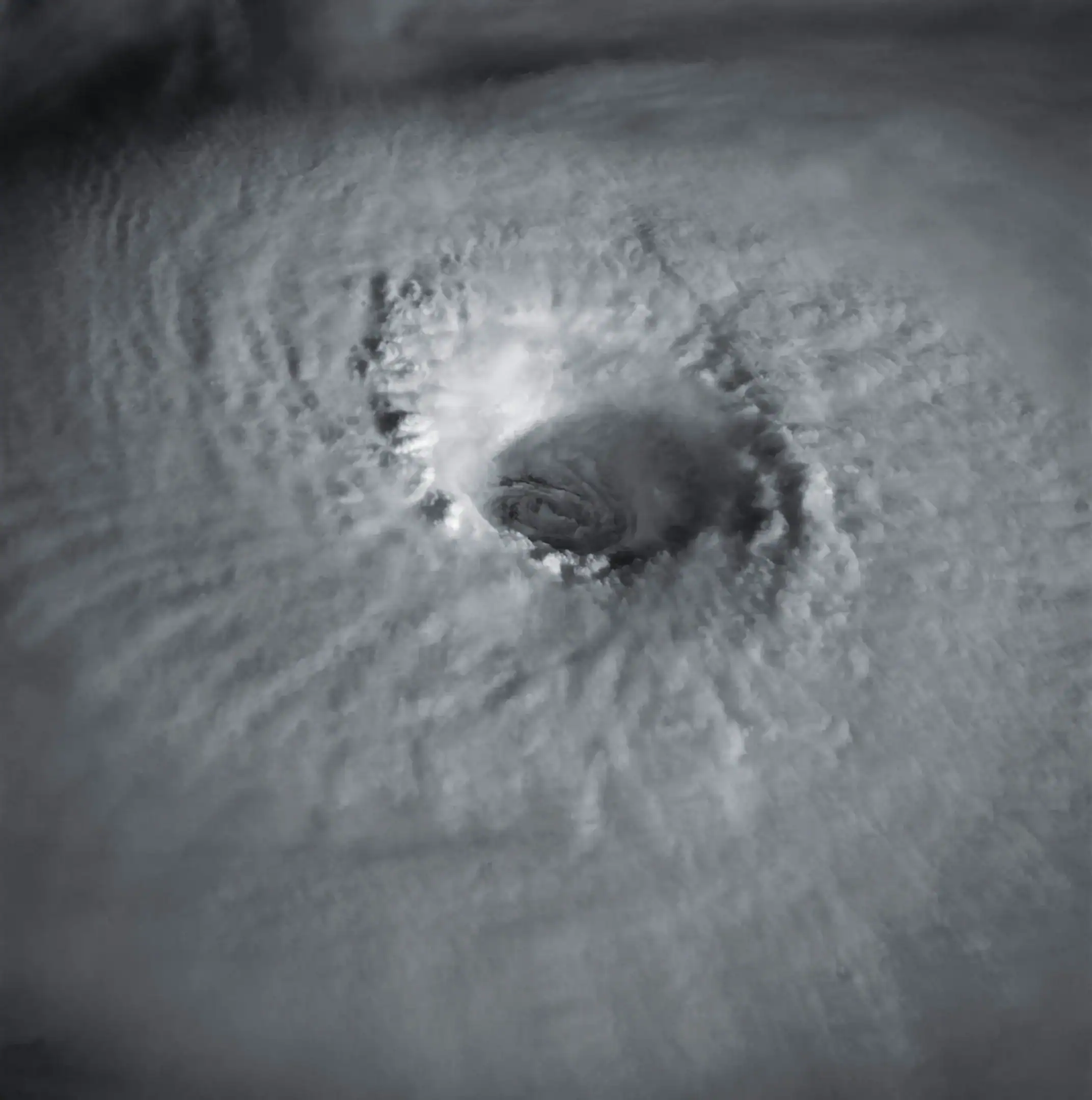
Spring tornado season occurs when warm, moist air from the Gulf of Mexico collides with cooler, drier air masses from the north.
Oklahoma’s geography—flat plains and central location—creates the perfect environment for tornadoes to form, especially when warm, moist air from the Gulf meets cooler air from the north. Located in Tornado Alley, which is known for its high frequency of tornadoes due to the collision of warm, moist air from the Gulf of Mexico and cool, dry air from Canada. Even in November when tornadoes are rare, we must remain vigilant.
Now here’s the science-y part. First, warm, humid air from the Gulf of Mexico collides from the north and provides the fuel for thunderstorms. When that moisture pools near the ground beneath cooler air aloft the atmosphere becomes unstable—essentially primed to explode upward.
Second, strong wind shear develops. Winds near the ground may be relatively light while winds higher up in the atmosphere can exceed 100 mph. That change in speed and direction with height creates rotation. When a thunderstorm’s updraft tilts that rotation vertically powerful supercell storms can form.
Third, the jet stream plays a crucial role. In the spring the jet stream often parks itself right over Oklahoma and steers storm systems and marks the boundary where warm and cold air clash most violently. For weeks at a time that tornado-struck battleground sits directly over our state.
The Heart of Tornado Alley and Oklahoma’s Place in It
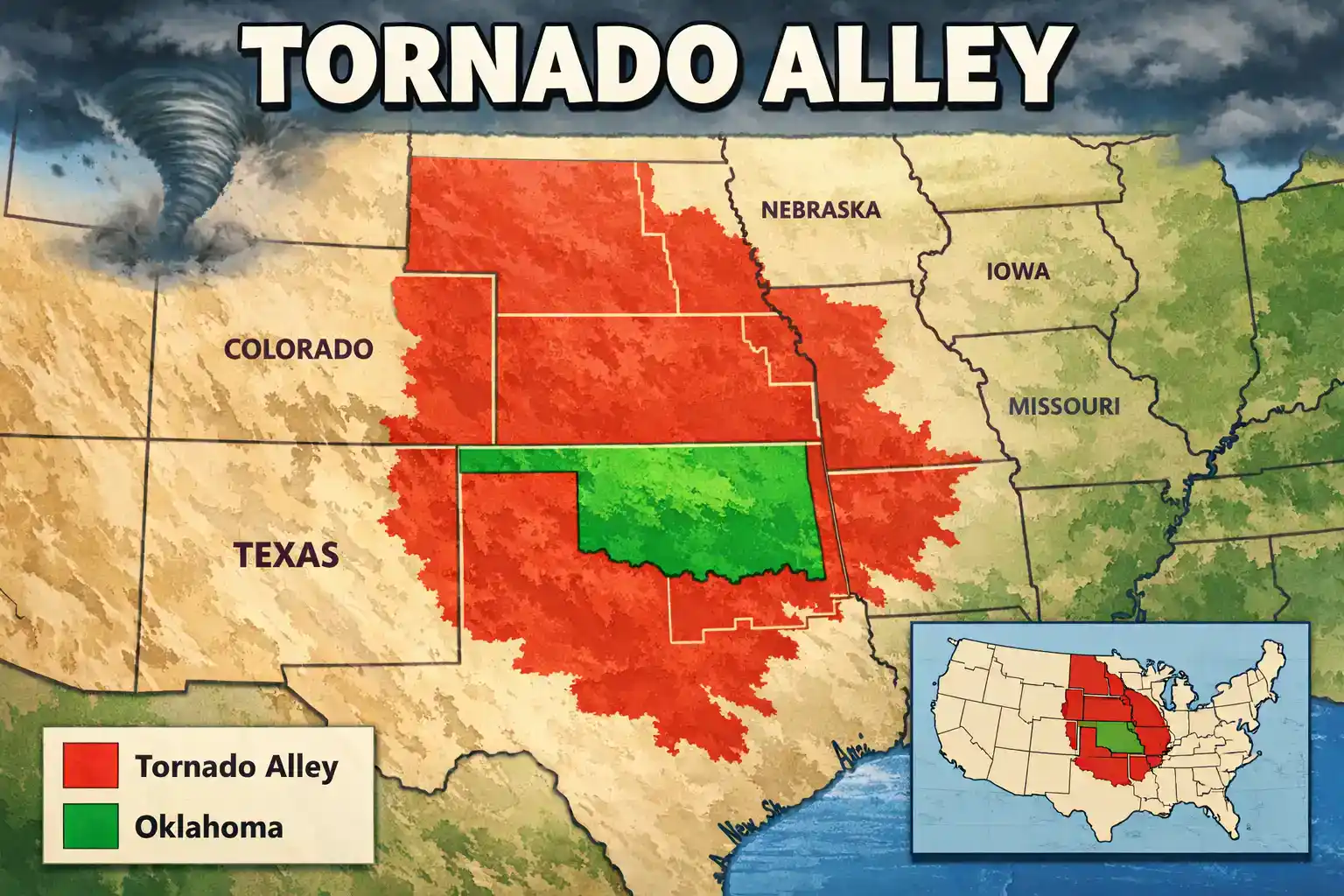
Basically, Tornado Alley refers to regions where these tornadoes wreak havoc frequently. It stretches from Texas north through Oklahoma, Kansas and Nebraska—an area where geography and weather patterns combine to produce the most tornadoes in the nation. And guess where Oklahoma is positioned in that alley—in the very middle of the alley.
Because of its position, hundreds of tornadoes have been documented by the Storm Prediction Center (SPC) over the decades. Some spring days we get dozens of tornadoes in a single mid-afternoon, from small storms that cause minimal damage to massive tornadoes that wipe out entire neighborhoods.
Although Texas is in the same tornado alley and get more tornadoes because of its size, Oklahoma’s smaller footprint means tornadoes are more concentrated here. Compared to neighboring states our exposure is relentless and consistent year after year.
Oklahoma: Local History, Risk, And Tornado Damage
Oklahoma ranks as the third-most tornado-prone state in the United States, averaging around 67 to 68 tornadoes yearly. The region also has recorded both the widest and most powerful tornadoes in history, with two of the top ten costliest tornadoes occurring in the state.
Oklahoma has experienced several significant tornadoes since 1882, with the first recorded tornado occurring that year. On the other hand, the first tornado warning ever issued in the United States was sent out for the Tinker Air Force Base area on March 25, 1948, shortly before an F3 tornado hit the base.
Due to its location, several EF4 and EF5 tornadoes have struck in recent decades, including the most destructive Moore tornadoes in 1999 and 2013. There were over 55 fatalities caused by the 1999 F5 tornado, with the highest wind speeds ever recorded on Earth, at 321 miles per hour. In the same year, the largest tornado outbreak in the was also recorded, where around 70 tornadoes were confirmed within 24 hours. Meanwhile, the tornado that hit Moore on May 20, 2013, killed 24 people and caused an estimated $2 billion in damages, making it the costliest tornado in Oklahoma history.
Some tornadoes have traveled miles, leaving a trail of debris and hundreds of casualties and destroyed homes, like the one that hit Midwest City or the EF4 that hit Bethany. The deadliest tornado in Oklahoma history struck Woodward in April 1947, killing at least 182 people. As for width and intensity, the El Reno tornado in 2013 sets the record covering 2.6 miles.
Where Tornadoes Occur
While tornadoes can occur anywhere in the state, some areas see more activity, which may mean more occasions for significant damage. Central Oklahoma—including Canadian, Cleveland, Oklahoma and Grady counties—see the most. A corridor from the Red River north along I-35 into Kay County also sees repeated impacts.
Urban and rural areas also face different challenges. Rural areas may get more visual warning as storms approach but emergency response takes longer. In cities like Oklahoma City and Tulsa, higher population density means one tornado threatens thousands of people and completely destroy multiple areas at once. These paths aren’t random—they follow recurring atmospheric and geographic patterns that favor storm intensification.
Tornado Activity Patterns And Trends
In Oklahoma, tornado activity ramps up fast in the spring. Peak activity occurs between April and June with May accounting for nearly a third of the yearly total. Activity slows in the summer, picks up a bit in the fall and is usually lowest in the winter—but never drops to zero.
Most tornadoes happen in the late afternoon and early evening, or specifically between 3 p.m. and 9 p.m. when daytime heat makes storms stronger. Tornadoes that strike after dark are especially dangerous because people are asleep and can’t see what’s coming. Some years are extremely active while others are quieter often influenced by climate patterns like El Niño and La Niña. That’s why relying on “last year wasn’t bad” can be risky.
How Tornadoes Occur And Move
Tornadoes are often accompanied by heavy rain, hail, and strong winds —as they are born from severe thunderstorms—making these severe weather events even more dangerous. Weaker tornadoes can also form along storm lines but tend to be shorter lived.
Most tornadoes move from southwest to northeast at 30-40 mph though some move much faster or barely move at all. To make it worse, their paths can change suddenly which makes them hard to predict.
Even if a tornado doesn’t form, a severe storm is still dangerous. Large hail, destructive straight-line winds and flash flooding cause moderate damage to major destructions and injuries every year. Flash flooding often follows tornadoes and can be just as deadly as the tornado itself.
Tornado Watches, Tornado Warnings, National Weather Service and Alerts

The National Weather Service watches Oklahoma weather 24/7 and issue weather alerts, tornado watches, and tornado warnings when conditions get dangerous. Tornado watches and alerts are a vital part of staying safe during Oklahoma’s severe weather season. When the Storm Prediction Center (SPC) issues a tornado watch, it means that conditions are right for tornadoes to develop—often across hundreds of miles, typically covering large portions of Oklahoma and neighboring states. This means you should be alert and prepared to find shelter if needed.
Meanwhile , a tornado warning means a tornado has been spotted or indicated by radar and you must take immediate action to protect yourself. Warnings are issued for much smaller areas, often just a few miles wide, and signal that a dangerous storm is imminent or already happening; these usually give 10-15 minutes notice, so act quick!
Other resources you could utilize are the Oklahoma Department of Emergency Management and your local emergency offices that provide preparedness information and public shelter locations. Also, the National Oceanic and Atmospheric Administration (NOAA) Weather Radio and smartphone emergency alerts deliver warnings instantly—make sure both are turned on.
Sign up for emergency alerts so you’ll know the moment a tornado warning is issued for your area or simply check for warning signs from your area. Being able to tell the difference between a watch and a warning—and knowing when to seek shelter—is crucial when severe weather strikes Oklahoma.
Tornado Warnings and Safety
When a tornado warning is issued in Oklahoma, every second counts. The safest place to be is in a strong building, such as your home, a school, or a designated storm shelter. If you have access to an underground shelter, use it. If not, head to an interior room or hallway on the lowest floor, away from doors, windows, and exterior walls. Bathrooms, closets, or small storage rooms often provide the best protection.
Follow basic guidelines for safety closely: get under a sturdy table or desk if possible, and use pillows, mattresses, or helmets to shield your head and neck from flying debris.
Schools across Oklahoma have strict tornado safety plans in place, ensuring students know exactly where to go during a storm, especially during school hours. Many schools have invested in storm shelters or reinforced safe rooms and the Oklahoma Department of Emergency Management works closely with local communities to make sure everyone knows what to do when severe weather threatens.
At home, make sure everyone in your family knows the plan and practices it regularly. By understanding the difference between a tornado watch and a tornado warning, and by following proven safety guidelines, you can protect yourself and your loved ones when a storm is passing through.
Tornado Damage And The Enhanced Fujita Scale

The Enhanced Fujita (EF) scale is used to rate tornadoes based on the damage they cause, from light damage (EF0) to total destruction (EF5). As the rating goes up so does the damage—from torn roofs and snapped trees to entire neighborhoods being leveled. If your home is damaged take photos before you start cleaning. Get wide shots and close ups of damaged areas. These will be important for insurance and FEMA claims.
Storm Shelter Options And Installation
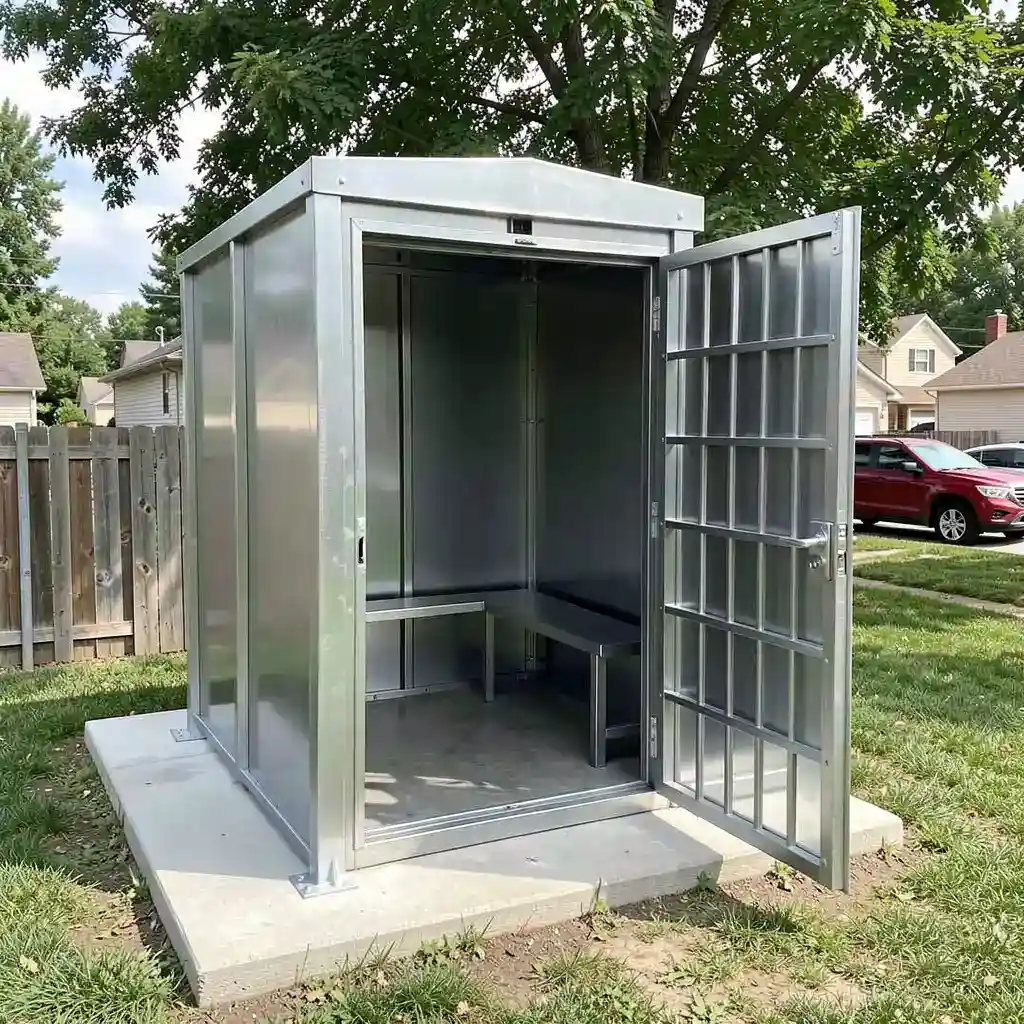
The safest place during a tornado is a properly installed storm shelter. Storm shelters designed to meet FEMA P-361 guidelines provide the highest level of protection against tornadoes. Underground shelters are good for additional protection but can flood if not properly installed. Above ground safe rooms built to FEMA standards are equal in protection and easier for many families to use.
Aside from this, every household should have a simple severe weather plan: know where to go, how to communicate if family members get separated, and have an emergency kit ready. Practicing these steps ahead of time makes it much easier to react when warnings are issued.
Before A Tornado: Severe Weather Plan
Every household should have a simple tornado plan and practice it regularly. Know where you’ll go to shelter, whether that’s a storm shelter or the lowest interior room of your home. Plan for work, school and other places your family spends time.
Set up a communication plan in case you’re separated. Choose an out of state contact and make sure everyone knows how to reach them. Keep a small emergency kit near your shelter: an emergency kit should include at least one gallon of water per person per day, non-perishable food, and a first-aid kit for at least three days. Restock supplies every 6 months.
Residents should also secure their properties by trimming trees and bringing in outdoor furniture before storms. Think about tornado safety long before it even hits.
During A Tornado: What To Do
When a tornado warning is issued go to your shelter immediately. If you don’t have one go to the lowest interior room away from windows and watch out for falling debris from roof damage. Bathrooms and closets offer extra protection.
Never stay in a vehicle during a tornado. If you’re in a mobile home leave and go to a nearby sturdy structure or community shelter. Cover your head and neck with anything you can find—mattresses, pillows or helmets—and stay put until officials say it’s safe.
Timing also affects your level of safety. Never wait for the moment that you can already hear the loud roars of the tornado, as this means it’s close and you have only seconds to act.
After The Tornado: Recovery And Safety
Once the storm passes check for injuries and call 911 if needed. Be careful outside—watch for gas leaks, unstable buildings and downed power lines. Don’t enter damaged structures until they’re declared safe; other debris might still fall from them.
Also. documenting damage with photos and videos can assist with insurance claims after a tornado. Save receipts for emergency expenses like food, lodging and repairs.
Next Step for Tornado Preparedness
Tornadoes are part of life in Oklahoma, and while we can’t control when or where they hit, we can control how prepared we are when they do.
Remember, the best protection comes from being informed and prepared. Stay updated on weather conditions, follow official guidelines, and consider adding a storm shelter or safe room to your home for an added layer of security to ride out the most violent tornadoes, so you can have peace of mind when seconds count.
Ready to prepare your family for storm season? OKC Shelters has in-ground and above ground shelter options designed for Oklahoma’s severe weather. Get a quote today (405) 896-8080 or sales@okcshelters.net—before the sirens sound.