When Oklahoma weather turns rough, most people think about the walls, location, and size of a tornado shelter. The door gets less attention, but it is one of the most crucial parts. Shelter doors need to provide easy access when a warning sounds and stay secure when severe storms bring powerful winds and flying debris.
There are several storm shelter door types, and the right choice depends on the shelter design, available space, and location. An underground garage shelter may use a different kind of tornado door than an above-ground safe room.
At OKC Shelters, we help homeowners look at the whole project. Our company installs concrete storm shelters, garage storm shelters, steel safe rooms, and custom shelters and bunkers built for the unpredictable nature of Oklahoma weather and the needs of each property.
Why Storm Shelter Doors Matter
A tornado door is not simply a heavy exterior door. It may sound obvious, but the door is literally the part of the shelter your family relies on to get safely inside and back out after the storm.
FEMA explains that a standard steel door is not automatically suitable for tornado protection. A tornado shelter door assembly should be tested for wind pressure and debris impact and installed in the same configuration that passed testing. Specialized door configurations should be engineered to meet applicable local codes and structural guidelines.
Common Storm Shelter Door Types
The most common tornado shelter doors use swinging, sliding, or hatch-style designs.
Inward-Swinging Shelter Doors
An inward-swinging door opens toward the interior. Debris piled outside is less likely to prevent it from opening after a tornado.
The main drawback is the space it takes up inside the shelter. The swing area must remain clear, which matters in a small room with adults, children, pets, or emergency supplies inside. FEMA guidelines note that inward-swinging and outward-swinging doors can both be acceptable when tested for their intended use.
Outward-Swinging Tornado Shelter Doors
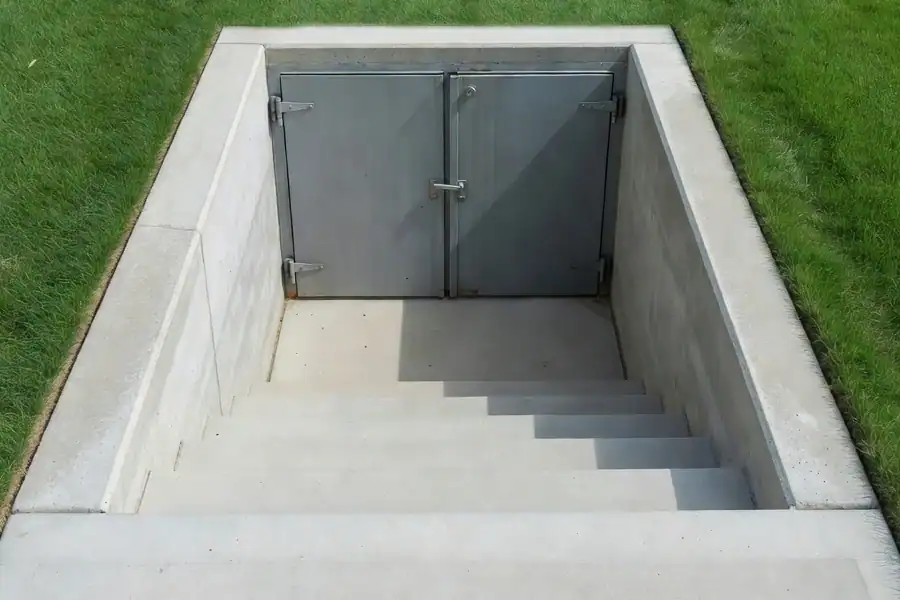
An outward-swinging tornado door opens away from the protected room. This can create more usable interior space because you do not have to reserve floor area for the swing.
The main consideration is the possibility of debris outside the exit. Outward-swinging doors must also use the hardware, hinges, frame, and anchoring specified for their tested design. Door direction alone does not determine safety.
Sliding Storm Shelter Doors

Sliding doors are common on certain underground and garage storm shelters. Because the door moves across the opening instead of swinging into the room, it can be a convenient option where space is limited.
Tracks, locks, seals, and hardware need to work smoothly so families can seek shelter quickly. Dirt, rust, or poor alignment can make a door harder to move. OKC Shelters’ garage units, for example, use sliding steel doors designed for quick entry and include rust-resistant protection.
Hatch-Style Doors
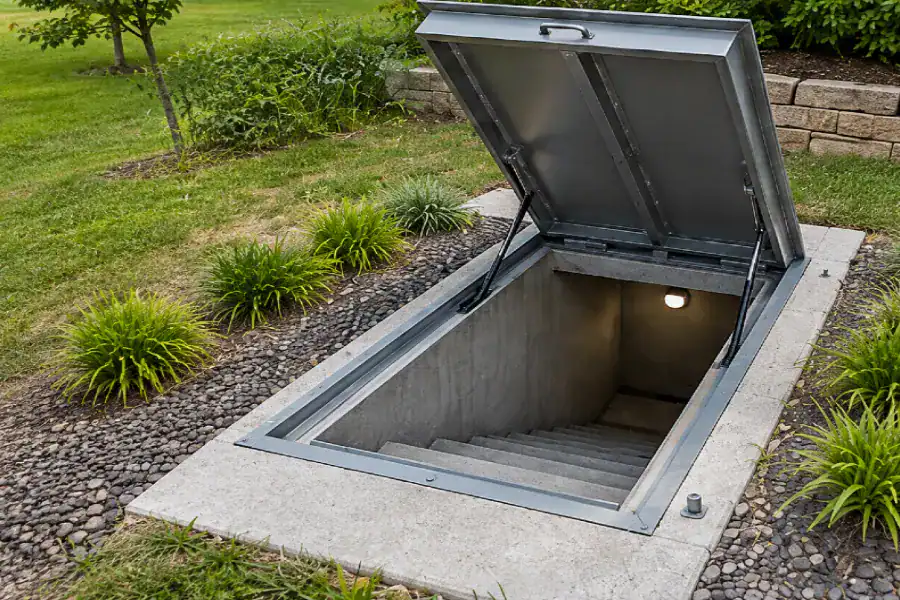
An underground tornado shelter or basement-style shelter may use a horizontal or angled hatch. Springs or lift-assist features can make a heavy hatch easier to open without excessive pull or push during an emergency.
Below-ground entrances also need moisture consideration. Door and threshold seals can help reduce moisture ingress, while rust-resistant coatings and proper drainage help protect steel parts from corrosion. The goal is not just to keep the shelter secure during a storm, but to ensure the entry remains usable afterward.
In-Swing vs. Out-Swing: Is One Safer?
Neither swing direction is automatically safer. Inward-opening doors are less likely to be blocked by debris, while outward-opening doors leave more usable space inside.
What matters is that the complete assembly has passed required testing in the configuration in which it will be installed. Local codes for a particular building or house may also influence the choice.
What Makes a Tornado Door Different From a Regular Steel Door?
A storm-rated shelter door is about more than weight. During tornadoes, strong winds can turn wood and other materials into flying debris. An ordinary steel door, even one with several locks, is not automatically suitable for life-safety protection.
A tested assembly considers the door, frame, hinges, locks, fasteners, and related materials together. Changing one component can affect performance.
Installation matters too. Poor alignment can cause a door to drag, bind, or fail to latch as intended. FEMA advises that shelter door assemblies be installed according to manufacturer instructions and maintained so specialized hardware stays functional.
At OKC Shelters, our professional installation process includes attention to anchors, fit, and door operation. That quality control gives homeowners confidence that the shelter will be ready when it matters, without panic over a door that will not open or stay closed correctly.
Above-Ground and Underground Shelter Doors
Where a shelter sits is a major factor.
Many above-ground safe rooms generally use reinforced steel construction and hinged doors. OKC Shelters installs steel safe rooms with secure anchoring for fast indoor protection. A step-in design can also be easier to reach than a below-ground shelter that requires steps or a ladder, especially when mobility is a consideration. FEMA likewise recommends considering mobility and other accessibility needs when deciding on safe-room type and location.
Garage storm shelters sit below the garage floor and often use sliding or hatch-style access. For underground shelters, corrosion resistance, drainage, seals, and water management are important because moisture can affect the door and hardware. A shelter should not simply be assumed leakproof; correct installation and maintenance help keep the space dry.
We also offer concrete storm shelters and custom shelters or bunkers in different sizes, layouts, and added features. Price and aesthetics may be part of the decision, but accessibility, durability, and protection should come first.
FEMA Guidelines, Wind Loads, and Proper Installation
FEMA P-320 and P-361 provide safe-room guidance, while ICC 500 covers storm shelter design and construction. FEMA does not approve or endorse individual storm shelter products, so homeowners should look for third-party documentation showing that the complete door assembly was tested and listed for the applicable criteria.

You may hear “250 mph” used when discussing tornado shelters. FEMA requires FEMA-funded residential safe rooms to use a 250 mph tornado design wind speed. ICC 500 design speeds, however, can vary by location. Every project should follow the requirements that apply to the shelter rather than assume every tornado door has one universal rating.
A tested assembly also needs to be installed properly and in its tested configuration. Professional installation helps ensure the shelter is constructed as intended.
At OKC Shelters, we focus on dependable materials, practical design, and professional installation for Oklahoma families. Our website lets homeowners compare options before choosing a shelter. Innovation can improve convenience and accessibility, but new features should support a tested design rather than add complexity for its own sake.
Frequently Asked Questions
Should a Tornado Shelter Door Open In or Out?
Either direction may work. Inward-swinging doors can reduce the chance of debris blocking the door, while outward-swinging doors preserve more room inside. The crucial point is proper testing, installation, and compliance with applicable local codes.
Can I Use a Normal Steel Door on a Tornado Shelter?
Not just because it is steel. FEMA guidance makes clear that ordinary steel doors are not substitutes for tested tornado shelter doors. The full assembly needs appropriate impact and pressure performance.
Do Tornado Shelter Doors Need to Withstand 250 mph Winds?
Not every shelter has one universal 250 mph requirement. FEMA-funded residential safe rooms use a 250 mph tornado design wind speed, while ICC 500 design speeds depend on location.
Do the Same Shelter Doors Work for Hurricanes?
Not necessarily. Tornado and hurricane shelters can have different testing and design requirements. FEMA P-361 addresses both hurricanes and tornadoes, but the criteria depend on the hazard and shelter design.
Which Storm Shelter Door Is Right for Your Family?
Think about how quickly everyone can reach the shelter, whether debris could affect the exit, and who needs to operate the door.
Oklahoma storms can move fast. A well-constructed shelter in the right place gives families peace of mind and confidence that there is a secure place to go.
If you are comparing storm shelter door types, OKC Shelters can help with location, sizes, access, materials, installation, and long-term protection. Just reach us at (405) 896-8080. Use this post as a starting point. If you are not sure which setup works for your garage, yard, or interior safe room, our team can walk you through the options.