When a violent tornado tears through Oklahoma, the difference between life and death often comes down to a single decision made weeks or months before the storm arrives. For families living in tornado alley, understanding what it truly takes to survive direct hits from the most powerful tornadoes isn’t just academic; it’s essential.
At OKC Shelters, homeowners often ask what type of shelter can truly withstand extreme winds, flying debris, and direct tornado impacts. The answer depends on proper engineering, certified materials, and professional installation that meets recognized safety standards.
This blog breaks down the engineering standards, shelter design requirements, and real-world performance benchmarks that separate genuine protection from false confidence.
What an EF5 Tornado Actually Means
The enhanced Fujita scale classifies tornadoes by estimated wind speeds and the damage they produce. An EF5 tornado, the highest rating, involves wind speeds exceeding 200 mph, enough to level well-built homes and turn everyday objects into high-velocity projectiles. Oklahoma City and its surrounding communities have experienced some of the most devastating EF5 events in recorded history, making this region ground zero for understanding maximum protection requirements.
When severe weather reaches this intensity, conventional construction offers virtually no protection. An EF5 can strip an entire structure down to its concrete slab, which is precisely why the location and construction of your storm shelter matter so deeply to your family’s safety.
The Role of FEMA Guidelines in Shelter Design

The gold standard for storm shelter construction in the United States comes from FEMA guidelines, specifically FEMA P-361, the agency’s publication on safe room construction for residential buildings. These standards exist because, without rigorous engineering benchmarks, shelter design would vary wildly and leave occupants exposed to catastrophic failure.
FEMA-compliant shelters must demonstrate the ability to withstand the extreme pressure and flying debris generated by EF5-level events. Meeting these standards is not optional for legitimate shelter manufacturers. It’s the baseline expectation, and reputable companies go further, building shelters that exceed what FEMA requires rather than merely meeting the minimum threshold.
Key requirements under FEMA guidelines include structural integrity capable of resisting wind speeds associated with EF5 tornadoes, debris impact testing using standardized projectiles that simulate real-world flying debris, proper anchoring to prevent the shelter from being displaced or overturned, and ventilation that continues to operate after the storm passes and allows occupants to breathe safely.
Debris Impact Testing: The Weakest Point Question
One of the most critical and often misunderstood aspects of safe room construction is debris impact testing. Flying debris is the leading cause of tornado fatalities, and it’s the component most likely to reveal the weakest point in any shelter system.
The National Storm Shelter Association (NSSA) and Texas Tech University’s Wind Science and Engineering Center have both contributed extensively to establishing impact testing protocols. Under these standards, shelters are subjected to impacts from a 15-pound 2×4 piece of lumber fired at 100 mph, simulating what an EF5 tornado would propel against a structure. Every wall panel, the door, and connection points must withstand these impacts without penetrating the interior where occupants shelter.
The door is historically the component that receives the most scrutiny during testing. A steel door that warps, deforms, or fails to operate after impact testing represents an unacceptable risk. Shelters built to rigorous standards ensure the door remains functional, because a shelter you cannot exit after the storm passes is dangerous in its own right.
Above Ground vs. Underground Shelters: Understanding Your Options
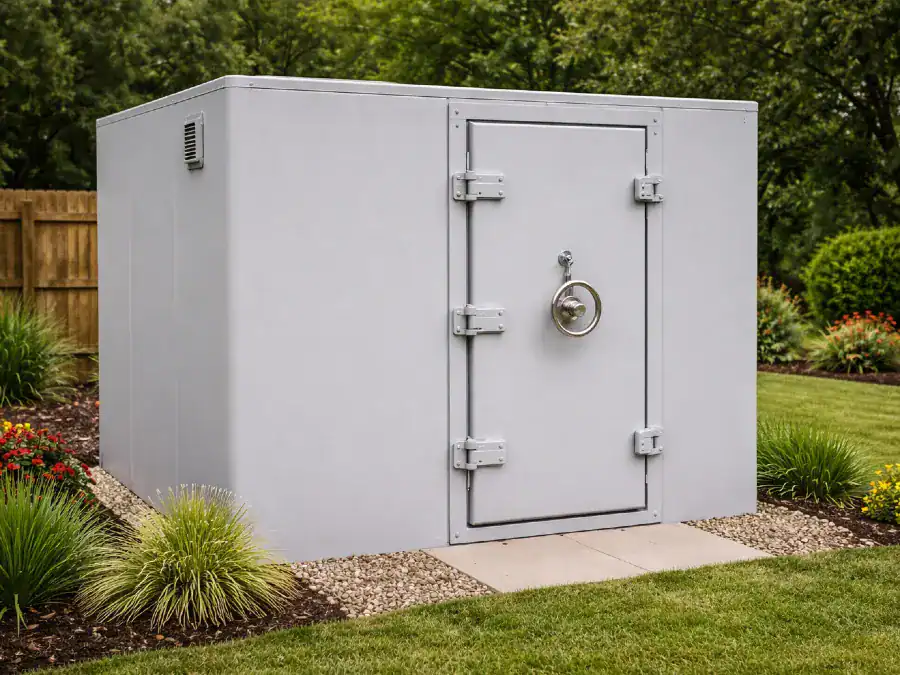
One of the most common questions Oklahoma families face is whether above-ground storm shelters or underground shelters offer better protection. The answer depends on several factors, including your property, accessibility needs, and how the shelter is installed.
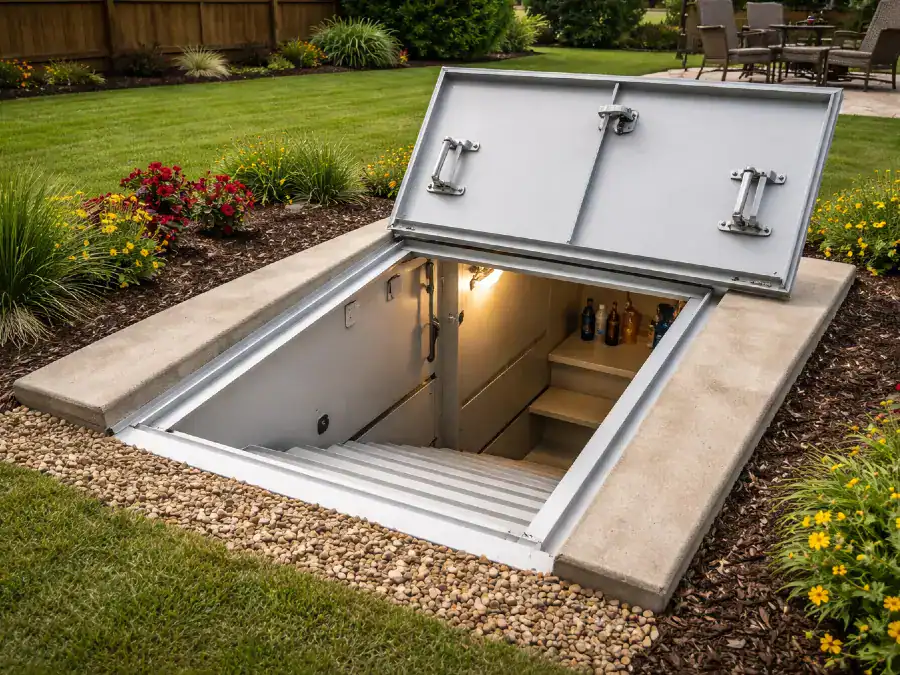
- Underground shelters are installed beneath the ground, typically accessed through a hatch. They offer natural protection from wind and debris by virtue of being below grade. Ground storm shelters of this type perform exceptionally well in real-world performance scenarios because the surrounding earth absorbs and distributes the forces an EF5 generates. However, they carry concerns about flooding in areas with high water tables and may present accessibility challenges for elderly family members or those with mobility limitations.
- Above-ground storm shelters — including safe rooms installed within or attached to a home- offer easier access and no flooding risk. When rigorously tested and properly anchored to a concrete slab, above-ground tornado shelters can provide near absolute protection even in direct hit scenarios. The key phrase here is properly anchored. An above-ground shelter that is not anchored according to engineering standards is a shelter that can become a projectile itself.
Both shelter types, when built to FEMA and NSSA standards, are capable of providing protection during EF5 events. The choice between them should be guided by site assessment, local soil conditions, and the specific needs of your family.
Safe Room Construction Standards That Matter
Not every safe room is created equal. The phrase “safe room” carries a specific meaning in the context of tornado protection; it refers to a shelter rigorously tested and built to withstand the forces of an EF5 tornado, not simply a reinforced interior room.
Concrete shelters and steel shelters each represent legitimate construction approaches, but both must meet the same core requirements. Concrete must be properly reinforced and poured to the specified thickness. Steel panels must meet gauge requirements and be welded or fastened to eliminate gaps that would allow debris penetration. The structural integrity of the entire structure — not just individual components- determines real-world performance.
Garage shelters, which are installed beneath the garage floor, represent a particularly practical option for Oklahoma homes. They offer weather-safe access without requiring occupants to step outside during a rapidly developing storm. For families in communities where tornadoes can escalate from warning to EF5 contact in minutes, easy access to shelter can be the deciding factor in survival.
Oklahoma Tornadoes Survival Stories: What the Data Tells Us
Oklahoma tornadoes’ survival stories consistently reveal the same pattern: families who sheltered in properly constructed, FEMA-compliant safe rooms survived events that destroyed everything around them. The homes were gone. The garage floors were bare. The cars were found miles away. But the occupants were safe.
These stories aren’t coincidental. They reflect decades of engineering refinement, rigorous testing at institutions like Texas Tech University, and the ongoing work of organizations like the National Storm Shelter Association to hold manufacturers accountable to real performance standards rather than marketing claims.
Equally sobering are the stories from families who relied on interior rooms, hallways, or bathtubs, common folk wisdom suggestions that offer no meaningful protection against an EF5 tornado. The survivability gap between a FEMA-compliant shelter and an unprotected interior space is not marginal. It is the difference between near absolute protection and a near-certain catastrophic outcome.
What to Look for When Evaluating Shelter Options
If you’re preparing to invest in your family’s protection, the following criteria separate shelters built to protect occupants from those that are merely marketed as shelters:
- FEMA and NSSA certification: The shelter should carry documentation confirming it has been rigorously tested against published impact and pressure standards. Ask for this documentation before purchasing.
- Installation by qualified professionals: Even a well-built shelter can be compromised by poor installation. Proper anchoring into a concrete slab, correct placement relative to structural elements, and sealed penetrations all affect how the shelter performs under extreme weather conditions.
- Door performance: Inspect how the door operates and how it performed during debris impact testing. Can it be opened from the inside after an impact? Does it seal adequately to protect against flying debris and extreme pressure differentials?
- Ventilation: A shelter that does not provide ventilation after a storm passes puts occupants at risk from heat and carbon dioxide buildup. This requirement is explicit in FEMA guidelines and should not be treated as optional.
Track record and local experience: Companies with documented installations across tornado alley and verifiable customer histories offer a level of accountability that newer or distant providers cannot match.
Tornado Alley Demands More Than Minimum Standards
The reality of living in tornado alley, and Oklahoma City in particular, is that severe weather is not a hypothetical risk. It is a recurring feature of life. The May 2013 Moore tornado, the 1999 Bridge Creek–Moore tornado, and dozens of other documented events demonstrate that EF5 tornadoes do not stay theoretical for long in this region.
For families in Oklahoma, investing in a properly constructed storm shelter isn’t a luxury. It represents the best chance of survival when extreme weather arrives with full force. A shelter that is installed correctly, anchored properly, built from steel or concrete that has been rigorously tested, and meets or exceeds FEMA guidelines gives your family something no above-ground structure can: the genuine peace of knowing that when the storm passes, everyone inside will be safe.
The tornado doesn’t care whether your home is well-built or modest. It doesn’t distinguish between old construction and new. What it cannot defeat is a properly engineered, rigorously tested, FEMA-compliant shelter installed by professionals who understand what the wind demands of a structure. That is what protection actually means in tornado alley, and it is the only answer worth trusting with your family’s survival.
If you’re ready to explore storm shelter options for your Oklahoma home, OKC Shelters offers professional installation across Oklahoma City and surrounding communities, with solutions built to FEMA standards and backed by over 20 years of local experience. Contact us today.